
Bench Warrants in Lafayette Parish
A bench warrant is an arrest order a judge signs when someone fails to do what the court required. The usual trigger is a missed appearance. An unpaid fine or a skipped compliance date can produce one too. It is not a new charge. It is the court's way of pulling a person back in front of the judge, and Lafayette Parish judges use it for exactly that. The courts here also use more than one label for the same problem. Lafayette City Court's own guidance says a judge may issue an arrest, bench, or fugitive warrant after a missed date or an unpaid traffic obligation, so the wording on a record can vary even when the underlying failure is the same.
Note: Louisiana courts rarely use the term capias pro fine, which belongs to other states, so ask what the local docket actually calls the order.
The Article 333 Trigger for a Lafayette Parish Bench Warrant
Louisiana sets the process in Code of Criminal Procedure Article 333, which lets the court issue a warrant for the arrest of a defendant who was properly notified and failed to appear, and notify the surety on any bond. The word properly matters. The state has to show that notice went out and that the person knew about the date. That is why the notice, the citation, and the docket entry are the first documents to gather. A missed payment deadline and a missed appearance can lead to different next steps, even in the same case. The path from a normal case to an open Lafayette Parish warrant is short. Date set. Notice sent. No appearance. Warrant issued, then served or recalled, and the case resumes. It repeats across the parish in exactly that order.
How a Bench Warrant Is Issued
No officer decides this alone. A bench warrant starts with the judge who already has the case. The court notes the missed obligation, finds that notice was given, and signs the order. The clerk then enters it in the court's record. From there the order is routed for service. In the district court that means the sheriff's warrant division. In Lafayette City Court it means the city marshal, and a mayor's court in another Lafayette Parish city uses its own police department or marshal. The timeline explains why two people in similar situations get different answers. One case may still sit on a payment deadline with no warrant, while a nearly identical matter a week further along already has an open order.
Note: A court can issue the warrant the same day a person fails to appear, so a missed date is not something to wait out.
Lafayette City Court's Arrest, Bench, and Fugitive Warrants
Lafayette City Court describes three possible outcomes after a failure to appear, and they carry different weight in Lafayette Parish practice. An arrest warrant follows a charge and a probable-cause finding. A bench warrant follows a missed court obligation in a case the judge already controls. A fugitive warrant usually points to another jurisdiction that wants the person, and it is not the same as a federal warrant. Staff can say which label applies to a case, which is why the court's own contact route matters more than an online guess. Someone who checks a city case and sees one of these words should ask two separate questions: is the order still open, and what does the court want next?
Bench Warrant vs Arrest Warrant
On paper, a bench warrant and an arrest warrant look much the same. How each one gets issued, and why, is what sets them apart in Lafayette Parish.
| Point | Bench Warrant | Arrest Warrant |
|---|---|---|
| What starts it | A missed court date or unmet court requirement | A sworn complaint and a probable-cause finding |
| Who signs it | The judge already handling the case | A judge or magistrate reviewing new facts |
| Charge status | The underlying case is already open | A charge is filed with the warrant |
| How it usually ends | Reset, recall, payment, or voluntary appearance | Arrest, summons, surrender, or bond |
Reset, Recall, or Surrender a Lafayette Parish Bench Warrant
The right step depends on what the court says when you call. Asking for a reset is one thing; asking the judge to recall a Lafayette Parish bench warrant is another; surrendering is different again. Work through the options in order.
- Confirm the warrant with the issuing court and write down the status and any bond amount.
- Ask whether the court will accept a new date, which is the simplest outcome when the case can continue.
- Ask whether the court requires a written motion to recall or quash the order.
- If the court wants the person in custody first, ask where and when to appear before traveling.
- Keep the minute entry, receipt, or release paperwork that shows what happened.
Note: No Lafayette court publishes a standard motion-to-recall form or filing fee, so ask the clerk what the court expects.
How to Resolve a Lafayette Parish Bench Warrant
Resolution runs through the court that issued the order, not the agency that would serve it. The sheriff or marshal can confirm that an entry is open, but a judge controls whether it is withdrawn. That split is why a person may need two calls. One confirms the status and any bond. The second reaches the court that can set a new date or recall the Lafayette Parish order.
Do not assume that paying a fine clears a bench warrant. Ask the court to confirm the recall in writing, and ask how long the change takes to reach the sheriff's record before you rely on it.
Anything confirmed as open should go to an attorney. The Lafayette Parish warrant records home page lays out the bond and voluntary appearance options in one place.
The Lafayette City Marshal Warrant Division at 105 East Convent
Lafayette City Court sits on East Convent Street. The city marshal's warrant division works from the same building. It handles city-court process, including the Lafayette Parish bench warrants that follow a missed city date.
Lafayette City Marshal, Warrant Division
105 East Convent Street
Lafayette, LA 70501
337-291-8789
Office hours 8:30 AM to 4:00 PM
City Court's criminal and traffic line is the other direct route. The court's FAQ tells bench-warrant callers to use that line or the marshal's warrant division. Both Lafayette Parish offices expect these calls.
Which Lafayette Parish Court Issued It
Which court signed the order matters more than almost anything else in Lafayette Parish. The parish stacks several layers. Felony bench warrants in Lafayette Parish come from the Fifteenth Judicial District Court at 800 South Buchanan Street. Its clerk's criminal department holds the filed record and answers at 337-291-6329. Lafayette City Court takes city ordinances, traffic, misdemeanors, and some juvenile and civil matters. Its reach covers Lafayette plus Wards 3 and 10. Mayor's courts in Broussard, Carencro, Scott, and Youngsville each handle their own citations. Lafayette Parish justice of the peace courts in Wards 1, 2, 4, 5, 6, 7, 8, and 9 hear limited matters, and the clerk publishes their contact points. The district court hears cases across Lafayette, Acadia, and Vermilion. The Fifteenth Judicial District Court posts its courthouse address and division directory on its site.
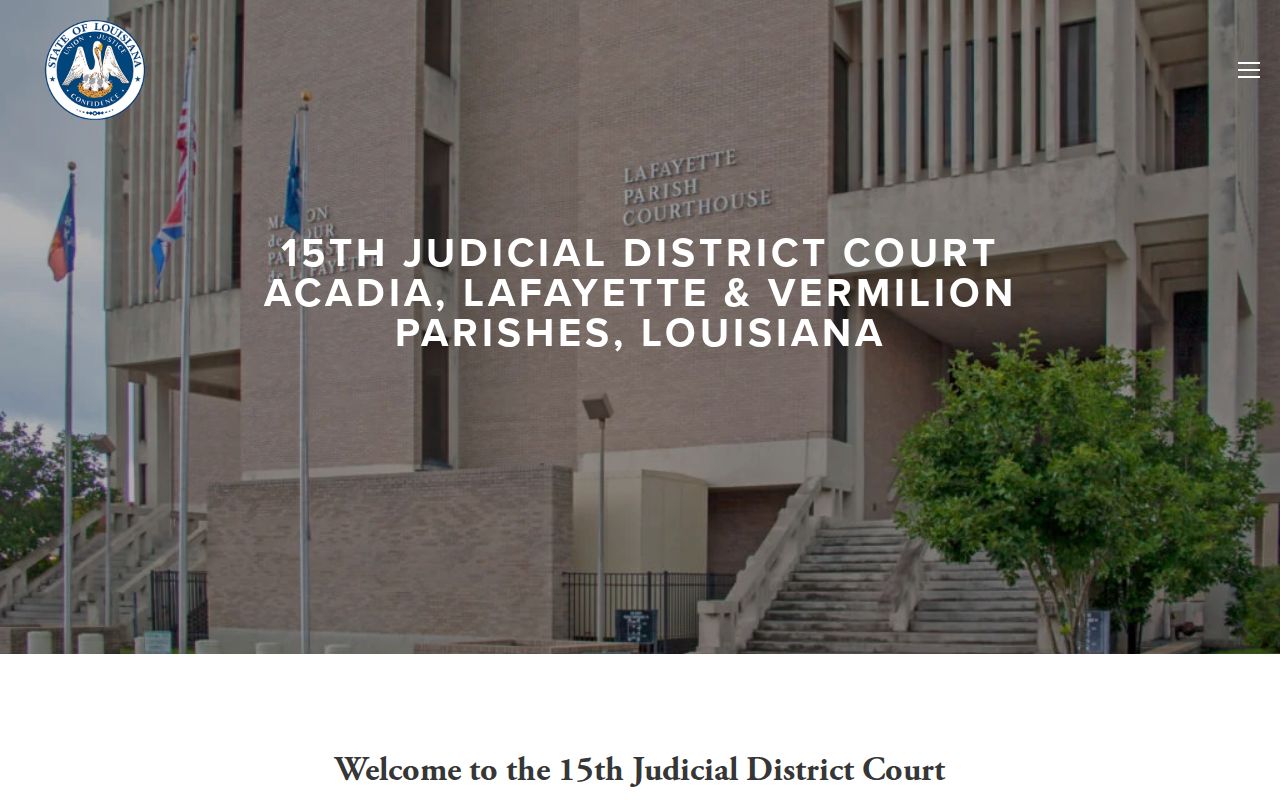
It identifies the Lafayette Parish clerk. The signing court also tells you which agency would serve its bench warrant.
Where a Lafayette Parish Municipal Bench Warrant Lives
A city bench warrant often stays out of the sheriff's system. That surprises people. Each mayor's court keeps its own docket, and the sheriff serves only the process in its channel. Broussard sends citation questions to the police department before payment. Carencro posts a court tab and a pay-ticket link but no public warrant search. Scott demands arraignment after an unpaid court-date citation. Youngsville's portal searches citations, not warrant status. None of these is a parishwide warrant list for Lafayette Parish. A clean Lafayette Parish result does not clear a city case, so call the city that issued the citation.
Calling Lafayette City Court About a Bench Warrant
Lafayette City Court answers on one main number with a menu. Option 2 reaches criminal and traffic. The court's own FAQ names that line for bench-warrant questions, along with the marshal's warrant division. Have a full legal name, a date of birth, and any docket or citation number ready. Then ask the real questions. Is the bench warrant still open? Which judge issued it? Is bond set? What does the court require to clear it? Write down each answer and the name of the person who gave it. If an appearance is required, confirm building hours and the identification rule before the trip, since the same building can turn people away at the door for security. A district court case instead belongs to the clerk's criminal department at 800 South Buchanan Street in Lafayette Parish.