
Arrest Warrants in Lafayette Parish
An arrest warrant is a command from a judge. It authorizes officers to take one named person into custody on a charged offense. It is not a website flag. It is not a notice or a bill. A judge or magistrate reviewed sworn facts and found probable cause before signing. That starting point matters when you check a record. The warrant points to a charge, and the charge tells you which court runs the case. Felonies belong to the Fifteenth Judicial District Court. A city offense goes to Lafayette City Court, or to a mayor's court in Broussard, Carencro, Scott, or Youngsville. Those courts keep separate records, so no single Lafayette Parish office can answer every arrest warrant question.
The Lafayette Parish Arrest Warrant Affidavit Process
Louisiana's first step appears in Code of Criminal Procedure Article 202. A magistrate may issue an arrest warrant after a sworn complaint or affidavit shows probable cause. The facts must support two things. An offense happened, and the named person committed it. Probable cause is a low bar next to a trial. It is still a real finding. Someone swears to the facts, and a judge must agree the facts justify an arrest. A charge filed without that finding is not an arrest warrant in Lafayette Parish or anywhere else. Once signed, the clerk files the warrant with the case. A record request in Lafayette Parish may therefore need two items: the underlying charge and the order that authorizes the arrest.
What a Lafayette Parish Arrest Warrant Contains
Article 203 lists what a Lafayette Parish arrest warrant must contain. Those same elements are the fields to check whenever a warrant record turns up.
| Issuing Date and Place | When and where the judge or magistrate signed the order. |
|---|---|
| Named Person or Description | The person to be arrested, by name or by a reasonably specific description. |
| Offense | The charge that supports the warrant, stated in the order. |
| Command to Arrest | The instruction to take the person into custody and bring them before the court. |
| Magistrate Signature | The authorizing signature. A bond amount may be noted for noncapital cases. |
The Lafayette Parish Clerk of Court criminal page spells out what the criminal department holds. The clerk files these records. Bring a docket number, a caption, and the document title when you ask for a copy.
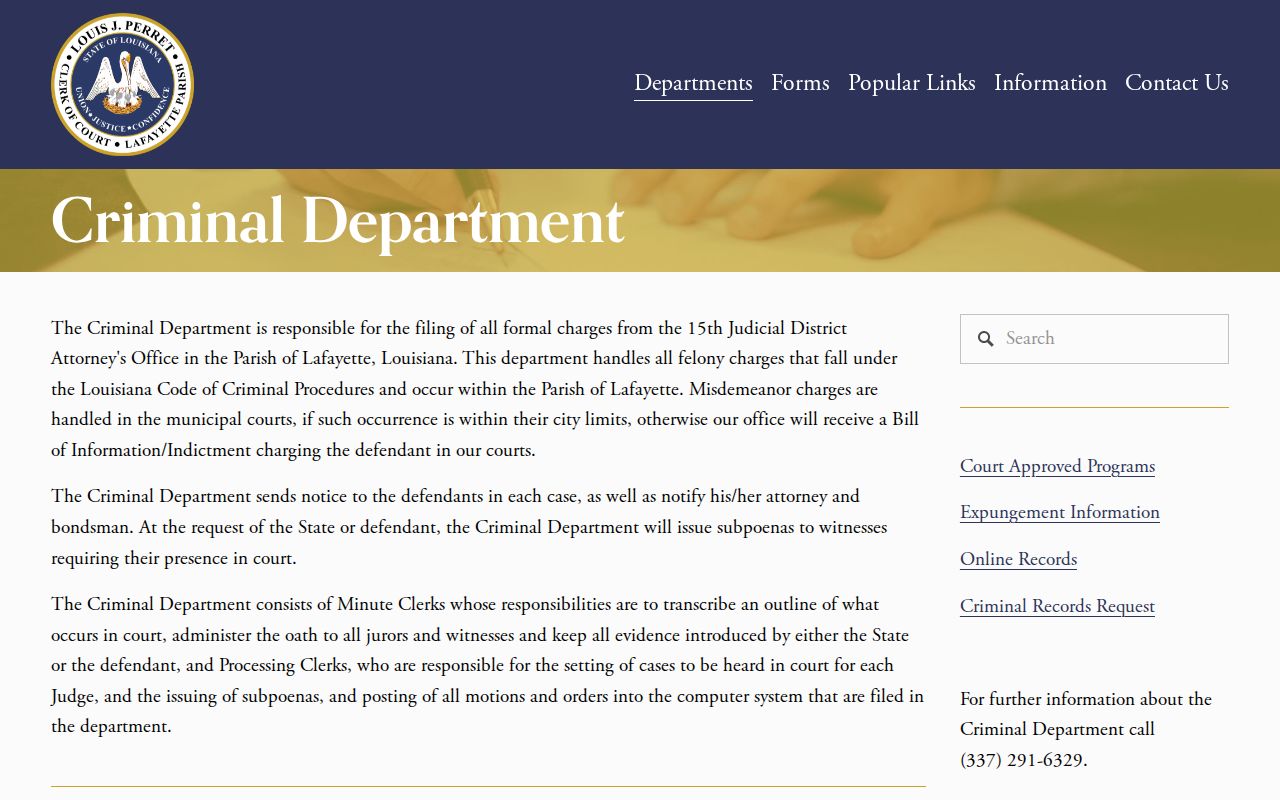
For a felony arrest warrant question in Lafayette Parish, two offices usually hold the answers: that department and the sheriff's warrant division.
Who Serves a Fifteenth Judicial District Arrest Warrant in Lafayette Parish
Issuing and serving are two different jobs, and that gap explains most confusion over Lafayette Parish arrest warrants. A Lafayette Parish judge signs the order. Deputies execute it.
Lafayette Parish Sheriff's Office, Warrant Division
Civil, Tax & Warrants, 1010 Lafayette Street
Lafayette, LA 70501
337-236-5830
Lafayette City Marshal, Warrant Division
105 East Convent Street
Lafayette, LA 70501
337-291-8789
Executes Lafayette City Court process
Federal process works differently. The U.S. Marshals Service serves federal warrants, so a Lafayette Parish warrant search or a city check will not reveal a federal case.
How Lafayette Parish Arrest Warrants Are Served
The warrant division starts with the address listed on the order, then adds whatever it knows about where a person might be found. Service can happen almost anywhere. A home, a workplace, a traffic stop, or the jail all work, and so does a voluntary surrender. After an arrest, booking takes place at the Lafayette Parish Correctional Center at 916 Lafayette Street. Booking creates a custody record, and that is the record most public portals actually display. The signed warrant itself stays a separate document filed with the court. There is one wrinkle: an officer may be allowed to issue a summons rather than make an arrest. Article 211.1 permits that choice for some outstanding misdemeanor and traffic warrant situations. It is a narrow option, so do not assume it reaches a felony case.
Bond Options After a Lafayette Parish Arrest Warrant
When a Lafayette Parish court sets bond, both the amount and the type matter. The sheriff's bail page lays out three routes, and they are not interchangeable.
| Bond Type | How It Works | What to Expect |
|---|---|---|
| Commercial | Posted through a licensed bonding company | A fee that typically runs about 12 percent, though the rate can vary |
| Personal surety, also called a W-2 | Backed by a friend or relative, with the judge's approval | Picture identification is required |
| Cash | The full bond amount paid in cash or by money order | Refunded after the appearance or adjudication under the sheriff's published terms |
Bond business runs through the correctional center. The sheriff posts set window hours rather than a round-the-clock counter. The sheriff's bail page shows the bond types, the identification requirement, and the payment hours for Lafayette Parish.

Check the bond type before you call. A cash bond and a commercial bond are handled differently at the window, so reading up front can save a Lafayette Parish trip.
Why a Custody Search Is Not an Arrest Warrant Check
The sheriff's public portal answers one narrow question: is this person in custody now or booked recently? That is all. It does not list people with unserved Lafayette Parish warrants, because no booking exists yet. A family member who runs a search, sees nothing, and concludes there is no warrant can be badly wrong. The record may sit unserved, be held by a city court, be sealed, be juvenile, or simply not be loaded into that system. So use the portal for custody only. For warrant status, call the warrant division or the issuing court, and treat any online result as a starting point rather than an answer.
Arrest Warrant vs Summons vs Bench Warrant
Three different orders can pull a person into a Lafayette Parish courtroom. The table lays out how each one begins, who signs off, and which office usually drives it.
| Order | What Starts It | Usually Handled By |
|---|---|---|
| Arrest warrant | A sworn complaint and probable-cause finding | District court or city court, served by sheriff or marshal |
| Summons | A charge filed with a court date instead of custody | The court that issues the summons, served by mail or officer |
| Bench warrant | A missed court date or unmet court requirement | The judge already handling the case |
A summons works differently. It asks you to show up on a date rather than face arrest, and Lafayette Parish courts use it for minor charges. Skip that date and the judge issues a bench warrant.
What to Do If There's a Warrant for You
Order matters here. Confirm the warrant with the Lafayette Parish court that issued it, since similar names cause false matches. Then speak with a defense attorney before you act.
If the warrant is real, do not wait for an officer to find you. An attorney can arrange a voluntary appearance or a surrender appointment, and many courts treat a planned surrender differently from a street arrest.
Ask the clerk whether bond has been set, what bond type the court accepts, and which office handles the appearance. Felony dockets sit with the clerk's criminal department. City charges go through the marshal. And beware phone scams: no one should demand payment for a warrant, and the sheriff's office does not take money by telephone.
Federal Warrants at the Lafayette Federal Courthouse
Federal charges skip the parish courts entirely. Lafayette Parish belongs to the Lafayette Division of the U.S. District Court for the Western District of Louisiana, located at 800 Lafayette Street. The U.S. Marshals Service serves federal warrants there and runs the Western Louisiana Fugitive Task Force with state and local partners. Federal warrants also tend to stay sealed longer than state process. So a parish or city warrant search will not surface one. You can pull court dockets through the federal electronic records system for a per-page fee, but a docket is a record path, not a warrant list. For the courthouse address, hours, and the parishes covered, the Western District of Louisiana Lafayette page has the details Lafayette Parish visitors need.
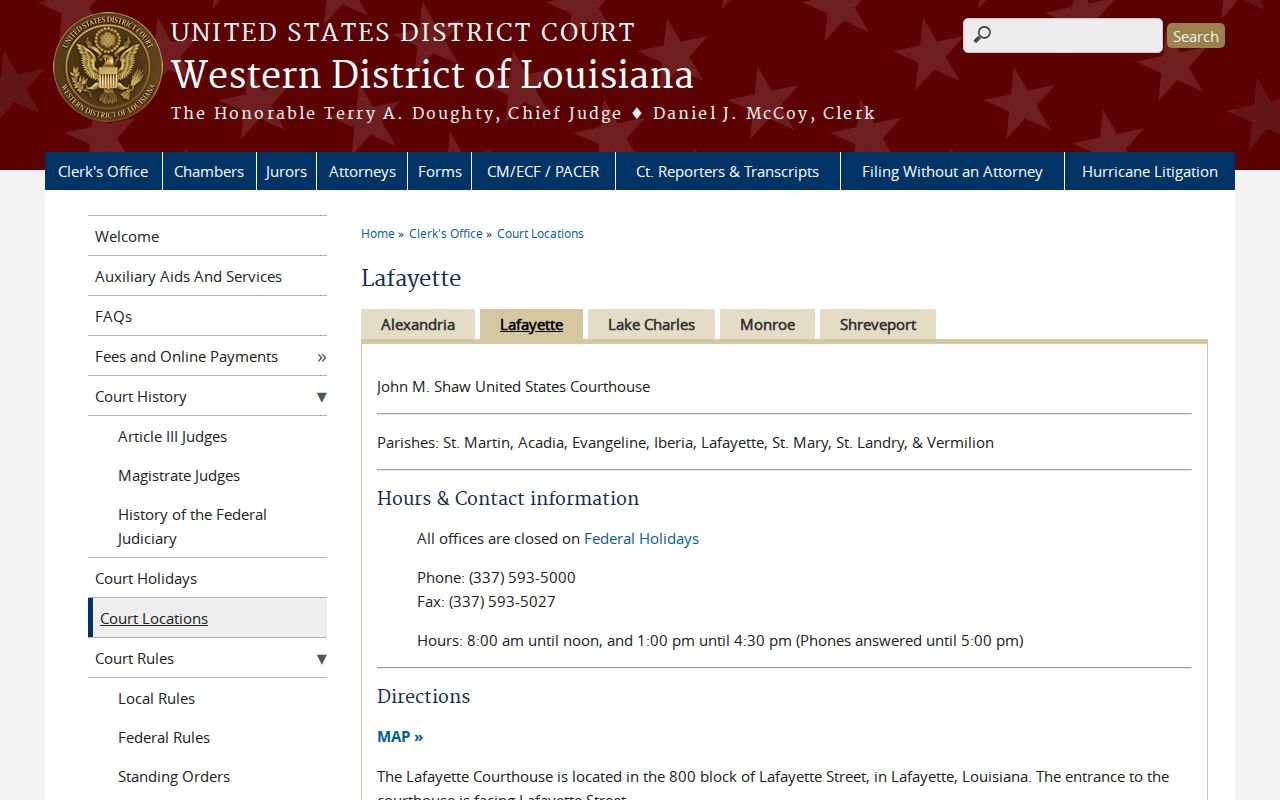
A federal warrant check belongs with the federal courts and the Marshals Service. The Lafayette Parish sheriff is the wrong desk for it.
Sealed Warrants and Record Limits
Some Lafayette Parish arrest warrants stay out of public view. The reasons are built into state law. Investigative files, pending cases, and protected sources can be withheld under La. R.S. 44:3, while juvenile records remain confidential under the Children's Code. So a warrant records request may return less than you hoped. Ask the office what it can release rather than assuming the file does not exist at all.
Note: A denial is worth keeping in writing, along with the request date, in case a later request becomes appropriate.